If you have been researching skin tightening in Dubai, you will almost certainly have come across Morpheus8. It is one of the most requested treatments in the city's aesthetic clinics, and one of the most misunderstood. Some of what is written about it is accurate, some is marketing, and a fair amount is simply vague.
This guide explains what Morpheus8 actually is, the mechanism behind it, who it tends to suit, and what a realistic treatment journey looks like, so you can decide from an informed position rather than a persuasive one. It reflects the approach we take to Morpheus8 at Sequoia Clinic: diagnostic-first, evidence-based, and honest about what the treatment can and cannot do.
What Is Morpheus8?
Morpheus8 is a radiofrequency (RF) microneedling device. It combines two established technologies in a single treatment: fine needles that create controlled micro-injuries in the skin, and radiofrequency energy delivered through those needles into the deeper layers of the skin and the fibrous layer beneath it.
The purpose of the combination is remodelling. The micro-injuries trigger the skin's natural repair response, while the radiofrequency energy heats the deeper tissue to a temperature at which collagen fibres contract and new collagen and elastin production is stimulated. Over the weeks that follow, the treated tissue gradually reorganises: firmer, smoother and more even in texture.
Morpheus8 is used on the face and neck most commonly, but it is also applied to areas of the body where skin laxity or texture is a concern, such as the abdomen, arms and knees.
How It Works
The mechanism is worth understanding, because it explains both the results and the timeline.
- Micro-needling. A matrix of ultra-fine needles penetrates the skin to a controlled, adjustable depth. This creates thousands of microscopic channels, which on their own prompt a wound-healing response.
- Radiofrequency delivery. Unlike traditional microneedling, each needle delivers RF energy at its tip. This heats the dermis and the subdermal layer directly, at depths a surface-based treatment cannot reach safely.
- Collagen contraction and remodelling. Heat causes existing collagen fibres to contract, which produces an early tightening effect. More importantly, it stimulates fibroblasts, the cells responsible for producing new collagen and elastin.
- Progressive improvement. New collagen takes time to form and organise. Most patients notice initial changes within a few weeks, with remodelling typically continuing over around three months after a course of treatment.
Because the needle depth and energy settings are adjustable, the treatment can be tailored to the area being treated and the concern being addressed, from fine lines and open pores to deeper laxity along the jawline.
This is also why the depth of assessment before treatment matters. Skin behaviour reflects more than the skin itself: sleep, hormones, nutrition and inflammation all influence how well tissue heals and remodels. That connection between internal health and skin is something we have written about before, and it is central to how we plan aesthetic treatment.
Who Is Morpheus8 For?
Morpheus8 tends to suit people who:
- Notice early to moderate skin laxity, particularly along the jawline, under the chin, or on the neck
- Want improvement in skin texture, acne scarring, open pores or fine lines
- Prefer a treatment that stimulates their own collagen rather than adding volume
- Are looking for meaningful change without surgery and with limited downtime
It is not the right tool for every concern. Significant volume loss is usually better addressed with other approaches, and severe laxity may warrant a surgical opinion. Deeper pigmentation concerns often respond better to laser-based treatments. This is precisely why a proper consultation matters more than the device: the honest answer is sometimes a different treatment, or a combination approached in stages, built around what your skin actually needs rather than what is easiest to book.
One genuine advantage of RF microneedling in a city as sun-exposed as Dubai: because the energy is delivered beneath the surface rather than through it, Morpheus8 is considered safe across a wide range of skin tones, including darker skin types where some laser treatments carry a higher risk of pigmentation changes. Settings still need to be chosen carefully by an experienced practitioner, which is one more reason device experience matters.
What to Expect from Treatment
Consultation first. At Sequoia Clinic, Morpheus8 begins with a clinical consultation, not a booking form. We assess your skin, discuss your goals and medical history, and confirm whether the treatment is appropriate. Where it is useful, we can look deeper: our comprehensive health assessment exists because skin quality, healing and ageing are whole-person matters, not surface ones.
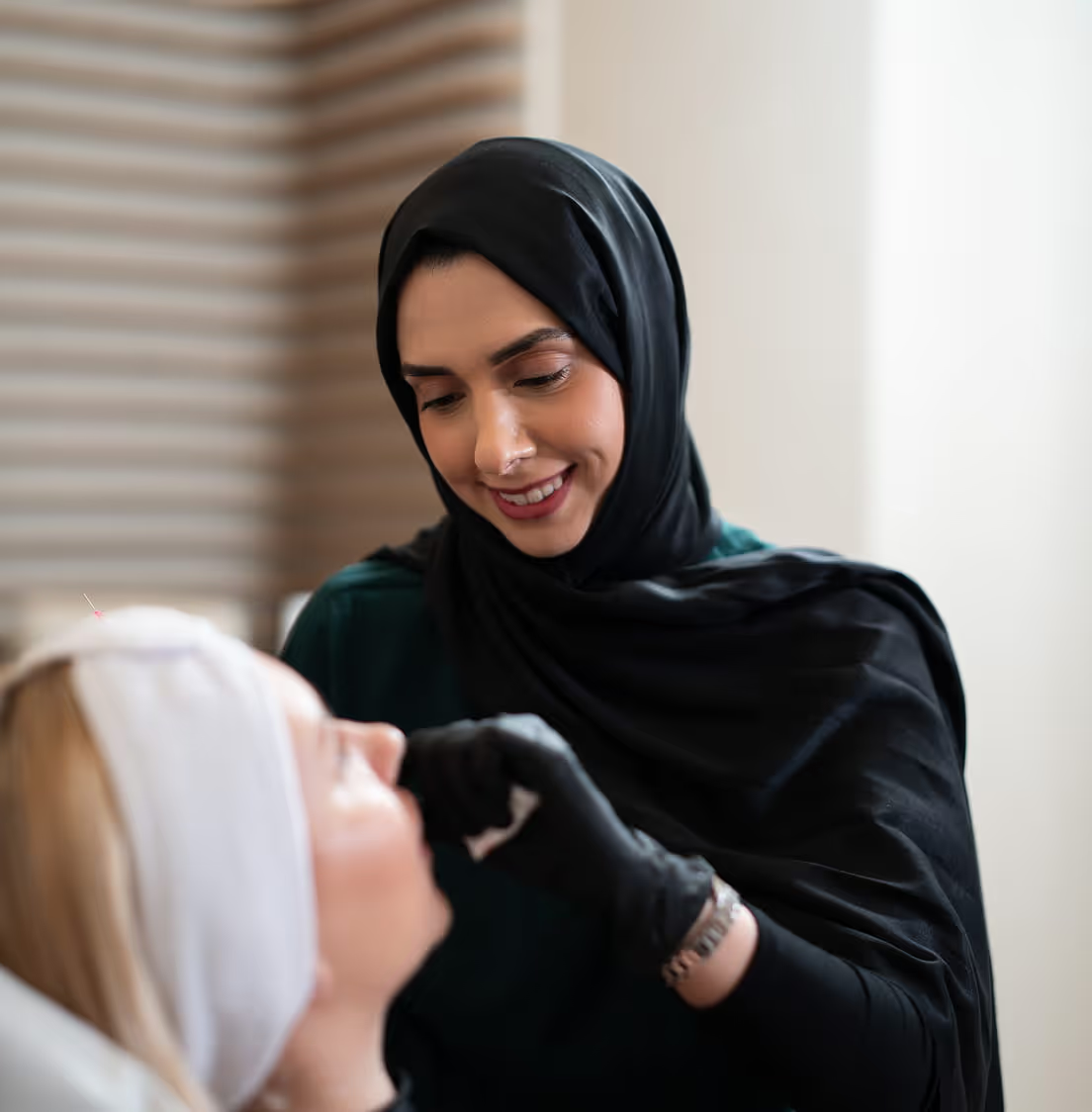
The session. A topical anaesthetic is applied for comfort, typically for 30 to 45 minutes before treatment. The treatment itself usually takes 30 to 60 minutes depending on the area. Most patients describe the sensation as heat and pressure rather than sharp pain.
Immediately afterwards. Expect redness and a feeling similar to mild sunburn for 24 to 48 hours, sometimes with pinpoint marks or light swelling. Most people return to normal activities the next day, with make-up usually possible after 24 to 48 hours on clinical advice.
Aftercare in Dubai's climate. Strict sun protection is essential while the skin heals, and in the UAE that means planning treatment around your routine seriously: high-SPF sunscreen, shade, and no deliberate sun exposure for at least a fortnight. Your practitioner will give you a specific aftercare protocol.
The course. A typical course is three sessions spaced four to six weeks apart, though your plan may differ based on your skin and goals. Results build gradually as collagen remodels, which is why before-and-after comparisons are usually most meaningful around three months after the final session.
Risks and Considerations
Morpheus8 has a well-established safety profile when performed by trained clinicians, but no medical treatment is risk-free. Temporary redness, swelling, dryness and pinpoint scabbing are common and expected. Less commonly, patients may experience prolonged redness, temporary changes in pigmentation, or minor surface irregularities that settle as the skin heals.
Risk is managed primarily through good practice: appropriate patient selection, correct depth and energy settings for the individual, sterile technique, and clear aftercare. It is reasonable, and advisable, to ask any clinic in Dubai who performs the treatment, what device settings they use for your skin type, and how follow-up is handled. A DHA-licensed clinic with physician-led oversight should welcome those questions.
Frequently Asked Questions
Does Morpheus8 hurt?
With topical anaesthetic, most patients find Morpheus8 uncomfortable rather than painful, and describe warmth, pressure and a prickling sensation. Sensitivity varies by area, with bonier zones such as the forehead and jawline typically feeling more. Discomfort settles quickly after the session.
How many Morpheus8 sessions do I need?
Most treatment plans involve three sessions, spaced four to six weeks apart. Some patients with mild concerns see the change they want after one or two sessions, while more established laxity or scarring may benefit from additional treatments. Your plan should be set at consultation, not sold by package.
How long do Morpheus8 results last?
Results typically last around one year or more, and many patients choose a single maintenance session annually. The treatment stimulates your own collagen, so results decline gradually with natural ageing rather than stopping abruptly. Lifestyle factors, sun exposure and skin care all influence longevity.
When will I see results?
Many patients notice early tightening within the first few weeks as collagen contracts, but the main improvement develops progressively as new collagen forms. The most representative point to judge results is around three months after your final session.
What is the difference between Morpheus8 and ordinary microneedling?
Standard microneedling creates micro-injuries at the skin's surface to stimulate repair. Morpheus8 adds radiofrequency energy delivered through the needles into the deeper dermis and subdermal layer, which standard microneedling cannot reach. In practice this means Morpheus8 addresses laxity and deeper remodelling as well as surface texture, while traditional microneedling remains a lighter-touch option for texture and glow.
Morpheus8 or HIFU: which is better for skin tightening?
They work differently and suit different faces. HIFU (high-intensity focused ultrasound) delivers focused energy to the deeper foundation layer of the face without needles, and suits patients focused purely on lifting. Morpheus8 treats the skin itself as well as the layer beneath, so it is often preferred where texture, scarring or pores are part of the picture alongside laxity. Neither is universally "better"; the right choice depends on your anatomy and goals, which is a consultation-level decision.
Does Morpheus8 melt fat?
Morpheus8 can reduce small, superficial fat pockets in specific settings, because RF energy at depth affects fatty tissue. In areas such as under the chin this can be used deliberately. It is not a fat-reduction treatment for larger areas, and in most facial treatments settings are chosen to tighten skin while preserving volume.
Is Morpheus8 safe for darker skin tones?
Yes, when performed with appropriate settings. Because the energy is delivered beneath the skin's surface rather than through it as light, RF microneedling carries a lower risk of pigmentation change than many laser treatments, which makes it a frequently chosen option across the wide range of skin tones treated in Dubai. Experienced, physician-led practice remains essential.
How much does Morpheus8 cost in Dubai?
Cost in Dubai varies with the area treated, the number of sessions in your plan, and the experience of the team delivering it. We would encourage you to be cautious of decisions led by price alone in either direction: the outcome depends on assessment, settings and technique, not just the device. A consultation will give you a clear, personalised treatment plan and a transparent quotation before you commit to anything.
What should I avoid after treatment?
For the first few days: direct sun exposure, heavy exercise, saunas and swimming pools, and active skincare such as retinoids and exfoliating acids. In Dubai's climate, sun protection is the single most important aftercare step, and it should continue well beyond the initial healing period.
Is Morpheus8 worth it?
For the right patient, treated for the right concern, the evidence and patient satisfaction data around RF microneedling are strong. It is not the right treatment for everyone, and a clinic should be willing to tell you so. The most reliable way to answer the question for your own skin is an honest clinical assessment of whether your primary concern is one Morpheus8 actually addresses.
Considering Morpheus8 in Dubai?
Sequoia Clinic is a DHA-licensed, physician-led longevity and aesthetics clinic in Al Barsha, Dubai. We approach skin treatment the way we approach everything: assessment before treatment, evidence before enthusiasm, and a plan built around you rather than a device.
If you are considering Morpheus8, a consultation at Sequoia Clinic can help determine whether it may be suitable for your individual needs and goals. Book a consultation with our clinical team.












.png)
.png)
.png)