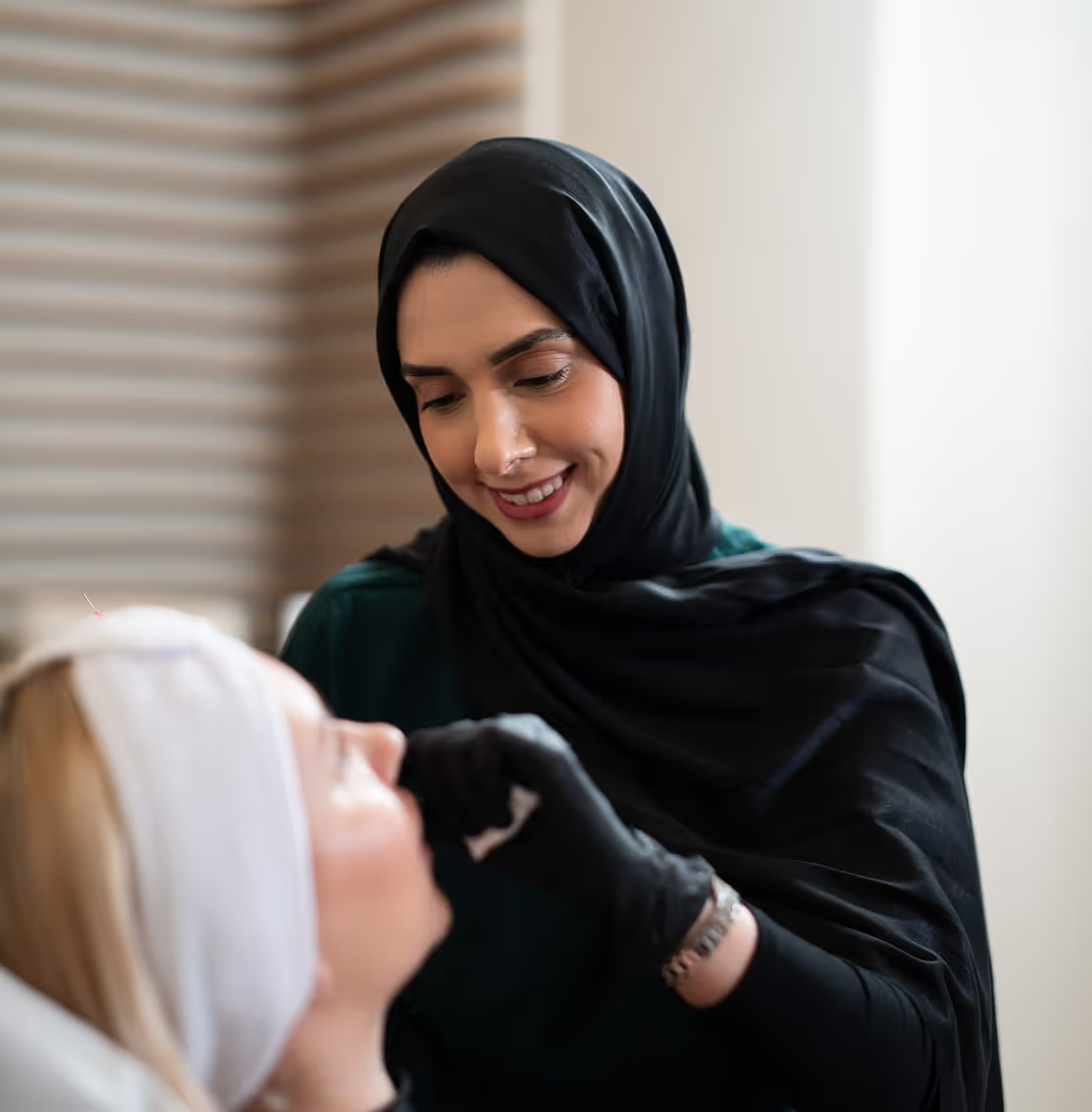
Almost everyone who asks about lip filler says a version of the same thing: they want it to look like nothing was done. Not bigger lips so much as better ones, in proportion, still recognisably theirs.
That outcome is achievable, and it is mostly not a matter of luck. It comes down to how much product is used, where it is placed, which technique suits your anatomy, and whether the person treating you is willing to do less than you asked for. This guide explains what actually separates a natural result from an obvious one, so you can judge a clinic before you commit rather than afterwards. It reflects how we approach dermal fillers at Sequoia Clinic: conservative volumes, planned reviews, and a preference for results that hold up in daylight.
What "Natural" Actually Means
Natural is a vague word, so it is worth defining in practical terms. A lip result generally reads as natural when three things are true.
The proportions suit your face. In most faces the lower lip carries slightly more volume than the upper. A commonly cited guide is roughly one to one and a half, though this varies with ethnicity and bone structure and should never be applied as a formula. When the upper lip is overfilled relative to the lower, the eye notices immediately, even if it cannot say why.
The lip still moves normally. Lips are mobile. They should stretch when you smile, purse when you drink, and show teeth when you talk. Filler that is too firm, too superficial or too plentiful restricts that movement, and a lip that moves oddly reads as treated no matter how it looks at rest.
The borders are intact, not drawn on. A natural lip has a defined but soft vermilion border. Overdefining it, particularly with product placed too close to the surface, creates a shelf or a visible line that photographs badly.
How Much Filler Is Actually Natural
This is the most common question we see, and searches for "0.5 ml lip filler" and "1 ml lip filler" bear that out.
Most first-time treatments aimed at a natural result use between 0.5 ml and 1 ml. A half syringe is often enough for subtle hydration and a little definition, particularly in younger lips or where the goal is correcting minor asymmetry. A full millilitre is a noticeable but still moderate change in most faces.
The more useful principle is that natural results are usually built rather than delivered. Treating conservatively, letting the product settle over two to four weeks, then reviewing and adding a small amount if needed, gives a better outcome than a single larger treatment. It also costs you nothing in results if you decide the first stage was enough.
Volume is cumulative in a way people underestimate. Lips treated repeatedly over years, each time with a full syringe and no gap for assessment, gradually change shape even when no individual appointment looked excessive. Much of what reads as overfilled in Dubai is not one bad treatment but several reasonable ones with no one keeping count.
Technique: Russian, Korean and What They Mean
Named techniques circulate widely, and people search for them by name. They are worth understanding, because the right one depends on your anatomy rather than on fashion.
The Russian technique places product vertically, injected from the lip border inward, with the aim of lifting height and creating a flatter, more defined upper lip with a pronounced cupid's bow. It suits lips that are naturally flat and wide. In lips that already project forward it can look heavy.
Korean-style lip treatment generally refers to a softer, more hydrating approach, using less product placed to smooth and gently plump rather than reshape, often favouring a fuller lower lip and a gradient effect.
Conventional linear placement remains the most widely used and, in experienced hands, the most adaptable. Product is placed along the lip in small amounts and moulded.
None of these is superior in the abstract. The relevant question at consultation is not "do you do the Russian lip" but "given how my lips sit, which approach would you use and why". A practitioner who answers that in terms of your anatomy is telling you something useful. One who answers in terms of what is popular is not.
Who Lip Filler Suits, and Who It Does Not
Lip filler tends to work well for people who want modest added volume, better definition, correction of mild asymmetry, or softening of fine lines around the mouth that have started to blur the border.
It is less likely to be the right answer in a few situations. If your main concern is a long distance between the nose and the top lip, filler will not shorten it and may make it look longer; a surgical lip lift addresses that differently, which is why "lip lift" appears in the same searches. If you have very thin, sun-damaged lip tissue, adding volume without addressing skin quality can look inflated rather than fuller. And if you have had repeated treatment already and are unhappy with the shape, the honest first step may be dissolving what is there and starting from your own anatomy rather than adding more.
Active cold sores, an active infection in the area, pregnancy and breastfeeding, and certain autoimmune or bleeding conditions are all reasons to delay or reconsider. This is part of why a medical history matters before a cosmetic appointment, a principle that runs through how we think about whole-person care.
What to Expect
Consultation first. We assess your lips at rest and in movement, discuss what you want and what your anatomy will support, and agree a volume. If what you are asking for would not look natural on your face, you should expect to be told so.
The appointment. Topical anaesthetic is applied for comfort, and most modern fillers also contain a local anaesthetic. The injection itself typically takes 15 to 30 minutes. Most people describe pressure rather than sharp pain.
Immediately afterwards. Swelling is normal and often significant for the first 24 to 48 hours, which is when most people privately panic. Lips can look uneven, firm and larger than intended during this period. Bruising is common. Cold compresses help.
Settling. Most swelling resolves within a week. The result you actually have is the one visible at two to four weeks, once the product has integrated and the tissue has relaxed. Judging your outcome before then is judging the swelling.
Review. A follow-up appointment at two to four weeks is where small refinements belong, and where the decision about whether to add anything at all is properly made. Lip filler typically lasts six to twelve months, at the shorter end of the filler range, because the lips are the most mobile part of the face.
Aftercare: The First Week
Good aftercare will not change the shape you were given, but it does affect how comfortable the settling period is and how quickly swelling and bruising resolve.
For the first 24 hours, keep your head elevated, apply a cold compress in short intervals, and drink plenty of water. Avoid touching, pressing or massaging the lips unless your clinician has specifically asked you to, since product placement in the first day is still mobile.
For the first two to three days, avoid strenuous exercise, saunas, steam rooms and hot yoga. Heat and raised blood pressure both increase swelling. Alcohol thins the blood and makes bruising worse, so it is worth skipping for a couple of days either side of treatment. Sleep on your back if you can.
For the first week, avoid dental work, facial treatments and flying where practical. Hold off on lip products applied with shared applicators while the injection points close. In Dubai's sun, apply an SPF lip balm once the surface has settled, since ultraviolet exposure degrades hyaluronic acid faster and affects the appearance of the skin around the mouth.
Contact the clinic promptly, rather than waiting for your review, if you notice severe or worsening pain, blanching or dusky discoloration of the lip or surrounding skin, or swelling that increases sharply after the first 48 hours rather than easing. These are uncommon, but they are the signs that need a clinician's eyes rather than reassurance from a search engine.
Risks and Considerations
Lip filler is a medical procedure and carries medical risk. Swelling, bruising, tenderness and temporary lumps are common and usually settle. Less commonly, patients experience prolonged firmness, asymmetry needing correction, or cold sore reactivation in those prone to it.
The serious risk, though rare, is vascular occlusion: filler entering or compressing a blood vessel, which restricts blood supply to the tissue. It requires immediate recognition and treatment, which is why the training of the person injecting matters more than the product they use. Any clinic treating lips should have hyaluronidase on site, the enzyme that dissolves hyaluronic acid filler, and a clinician who knows when to use it.
Safety in aesthetic medicine rests far more on the clinician than on the product. It is entirely reasonable to ask a clinic in Dubai who will be injecting you, whether they are one of its doctors, what their medical qualification is, how many lip treatments they perform, and what their protocol is if something goes wrong. A DHA-licensed, physician-led clinic should welcome those questions rather than deflect them.
A note on cost, since it dominates the search results for this treatment in Dubai. Price varies with product, volume and the experience of the person treating you. We would gently caution against choosing on price alone in either direction. A low figure often reflects a less experienced injector or a smaller volume than you assumed, and a high one is not on its own evidence of skill. What you are paying for is judgement and the ability to manage a complication.
Frequently Asked Questions
How much lip filler looks natural?
For most first treatments, 0.5 ml to 1 ml produces a natural result. Half a syringe suits subtle definition and hydration, while a full syringe gives a moderate, visible change in most faces. Building gradually across two appointments, with a review between them, generally looks more natural than a single larger treatment.
How do I make sure my lip filler does not look fake?
Choose an experienced medical injector, start with a smaller volume than you think you want, and insist on a review appointment before adding more. Ask which technique suits your anatomy rather than requesting a named trend. Results that respect your existing lip proportions and preserve normal movement read as natural.
How long does swelling last after lip filler?
Most swelling settles within five to seven days, with the first 48 hours the most pronounced. Bruising can last a little longer. The final result is best assessed at two to four weeks, once the filler has integrated and the tissue has relaxed.
What is the Russian lip technique?
It is a method of placing filler vertically from the lip border inward, aiming to increase lip height and definition while keeping the lip relatively flat in profile. It suits some anatomies and not others. Whether it is appropriate for you is a clinical judgement made at consultation, not a style choice made in advance.
Can lip filler be dissolved?
Yes. Hyaluronic acid fillers can be dissolved with hyaluronidase, an enzyme that breaks the product down, usually within days. It is a medical treatment with its own risks and should be performed by a qualified clinician. The fact that it is reversible is one reason hyaluronic acid is the standard choice for lips.
Considering Lip Filler in Dubai?
Sequoia Clinic is a DHA-licensed, physician-led longevity and aesthetics clinic in Al Barsha, Dubai. Our approach to aesthetic treatment generally, and to lip filler in particular, is conservative by design: small volumes, planned reviews, and a willingness to suggest less treatment, or none, where that is the better answer.
If you are considering lip filler, a consultation at Sequoia Clinic can help determine whether it may be suitable for your individual needs and goals. Book a consultation with our clinical team.