
Your skin is often the first part of your body to signal that something is off internally. A change in texture, a new pattern of breakouts, persistent dullness that does not respond to topical care. These are not always cosmetic problems. They can be messages from deeper systems.
Yet most aesthetic treatment in Dubai, and elsewhere, focuses entirely on the surface. Products, procedures, and protocols designed to address what is visible, without asking why the problem appeared in the first place.
This is not a criticism of aesthetic treatment. It is an observation about where the conversation usually stops. The relationship between internal health and skin is well documented in clinical research, and understanding it can change how you approach skin care at every level.
How Internal Health Shows Up in Your Skin
Skin is the body's largest organ, and it is metabolically active. It relies on adequate blood flow, balanced hormone signalling, functional nutrient delivery, and a well-regulated immune system to maintain itself. When any of these systems are disrupted, the skin often shows it.
Some patterns are familiar. Persistent breakouts along the jawline may suggest hormonal involvement. Dull, sallow skin can be associated with poor circulation, dehydration, or nutritional gaps. Increased sensitivity or redness may reflect chronic low-grade inflammation that has nothing to do with the skincare products in your bathroom.
Other patterns are less obvious. Premature ageing, particularly loss of elasticity and collagen density, can be influenced by factors that no topical treatment can reach: cortisol levels, thyroid function, iron status, sleep quality.
The point is not that every skin concern has an internal cause. Many do not. But when surface-level treatment repeatedly falls short, or when skin changes appear without an obvious external explanation, the answer is often found elsewhere in the body.
The Gut-Skin Connection
The relationship between gut health and skin has received considerable attention in recent years, and for good reason. Research suggests that the gut microbiome, the complex community of bacteria and other organisms that live in the digestive tract, plays a role in regulating systemic inflammation. When that microbial balance is disrupted, the effects can extend well beyond digestion.
Studies have explored links between gut dysbiosis and several skin conditions, including acne, rosacea, and eczema. The proposed mechanism involves the gut's influence on immune regulation and inflammatory pathways. When the gut barrier is compromised, a state sometimes referred to as increased intestinal permeability, inflammatory signals may circulate more freely. The skin, as a highly vascular and immunologically active organ, can be affected.
This does not mean that every case of acne is a gut problem. The evidence is still developing, and the relationship is complex. But for patients who experience persistent skin issues alongside digestive symptoms, bloating, food sensitivities, or irregular bowel function, the gut-skin axis is worth investigating.
In clinical practice, this often begins with functional testing: a detailed look at gut microbiome composition, markers of intestinal inflammation, and digestive function. The results can inform both nutritional interventions and, where relevant, the selection of aesthetic treatments that work with the body rather than against it.
Hormones and Skin Health
Hormonal balance is one of the most significant internal factors affecting skin quality, and one of the most frequently overlooked in standard aesthetic consultations.
Oestrogen supports collagen production, skin hydration, and wound healing. As oestrogen levels decline during perimenopause and menopause, many women notice changes in skin thickness, elasticity, and moisture retention. These changes are not cosmetic failings. They are physiological responses to a shifting hormonal environment.
Testosterone and its derivatives, particularly dihydrotestosterone (DHT), influence sebum production. Fluctuations in androgen levels can drive adult acne, particularly along the jawline and chin. This is common in conditions such as polycystic ovary syndrome (PCOS) and can affect skin well into a woman's thirties and forties.
Thyroid hormones regulate metabolic rate across virtually every tissue in the body, including the skin. Hypothyroidism can present as dry, rough skin, thinning hair, and slow wound healing. Hyperthyroidism may cause excessive sweating, flushing, and changes in skin texture.
Cortisol, the body's primary stress hormone, has its own effects. Chronically elevated cortisol can impair collagen synthesis, compromise the skin barrier, and contribute to increased sensitivity and slower recovery from procedures.
A comprehensive hormone panel, interpreted by a physician who understands skin biology, can sometimes reveal what months of topical treatment could not. This is particularly relevant in Dubai, where high-performance lifestyles, demanding schedules, and environmental stressors can all contribute to hormonal imbalance.
Nutrition, Deficiency, and Skin Quality
The skin requires a steady supply of specific nutrients to maintain its structure, function, and repair capacity. When those nutrients are insufficient, skin quality may be affected even when external care is consistent.
Vitamin D plays a role in skin cell growth and repair, as well as immune modulation. Deficiency is common in indoor-heavy lifestyles and, perhaps counterintuitively, in hot climates where sun avoidance is standard practice. Dubai, despite its abundant sunshine, sees significant rates of vitamin D insufficiency across its population.
Iron is essential for oxygen transport to tissues, including the skin. Low iron stores can contribute to pallor, dark circles, and a general loss of vitality in the complexion.
Zinc supports wound healing, immune function, and sebum regulation. Research has explored its role in acne management, and deficiency is associated with impaired skin repair.
Omega-3 fatty acids contribute to the skin's lipid barrier and may help modulate inflammatory responses. Low intake is common in diets that are otherwise nutritionally adequate.
B vitamins, particularly B12, folate, and biotin, are involved in cell turnover and energy metabolism. Deficiencies can manifest as dermatitis, hyperpigmentation, or brittle hair and nails.
Identifying these gaps typically requires blood work. Not a generic wellness panel, but targeted testing that measures the specific markers relevant to skin health. Where deficiencies are confirmed, they can be addressed through dietary modification, oral supplementation, or, in cases where absorption is a concern, intravenous or intramuscular delivery under clinical supervision.
Why Surface-Level Treatment Has Limits
This is not an argument against aesthetic treatments. Procedures such as skin resurfacing, injectable treatments, and medical-grade facials are effective and well supported by evidence. They address real concerns and can produce meaningful improvements in skin quality and appearance.
But they work on what is already there. They treat the tissue as it presents. If the underlying drivers of skin deterioration, chronic inflammation, hormonal disruption, nutritional deficiency, poor sleep, or gut dysfunction, are not addressed, the results of even the most skilled aesthetic work may be limited in duration or impact.
Consider a straightforward example. A patient receives a course of skin-boosting injections to improve hydration and fine lines. The results are positive. But within a few months, the skin returns to its previous state. A blood panel reveals low vitamin D and suboptimal iron stores. A hormone assessment shows declining oestrogen. None of these factors were addressed because no one looked.
This is not a rare scenario. It is common in clinics that treat skin as an isolated organ rather than as part of a connected system.
The most effective approach combines external treatment with internal understanding. Aesthetic procedures that are informed by diagnostic data tend to produce results that are more consistent and longer-lasting, because they are working with a body that has been given what it needs to support the outcome.
What Whole-Person Care Looks Like in Practice
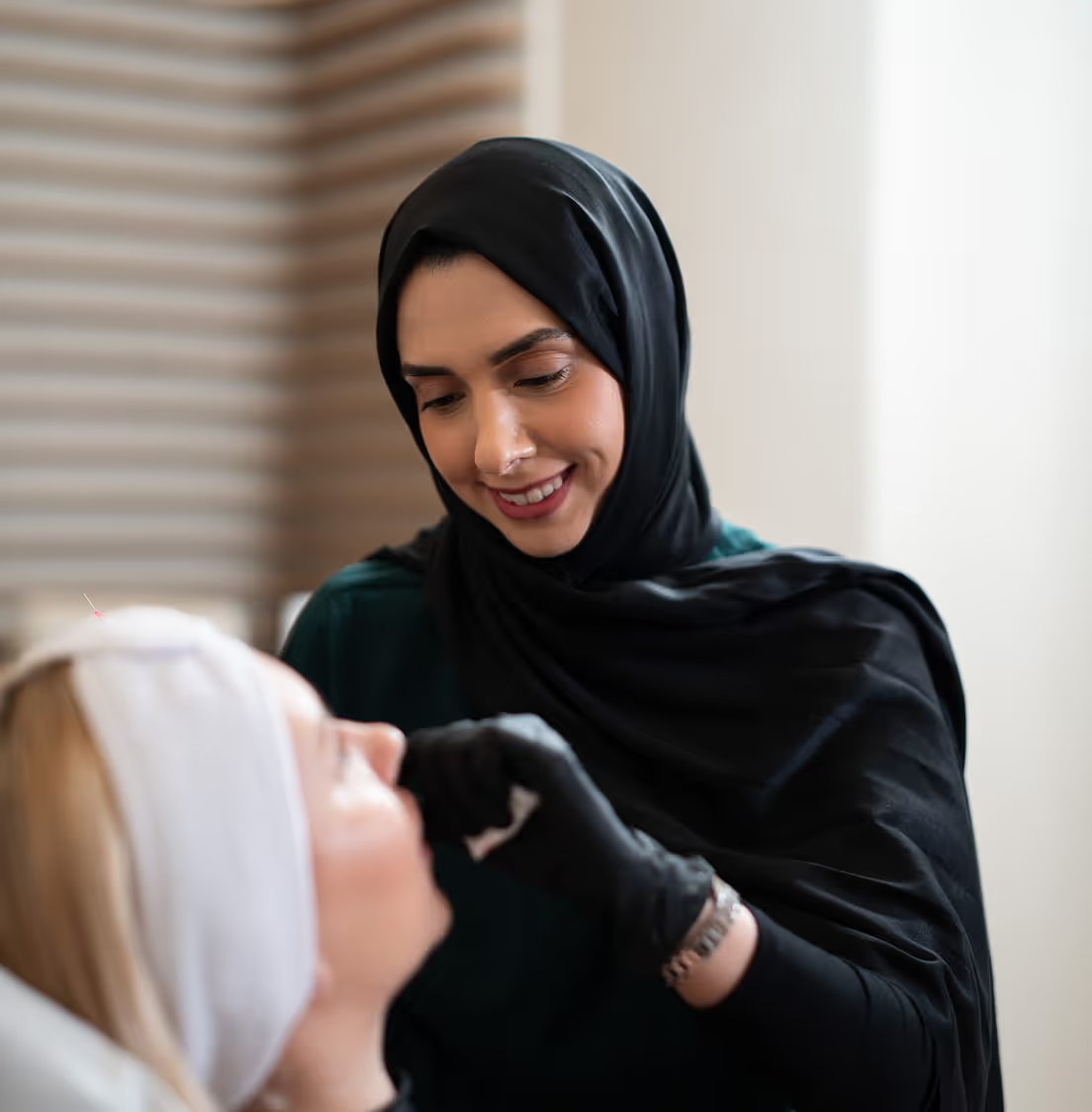
Whole-person care is a phrase that is easy to use and harder to deliver. In practice, it means something specific: a clinical environment where internal health and aesthetic care are not separate departments with separate conversations, but parts of a single assessment.
It means a physician who reviews your hormone levels before recommending a skin treatment plan. A clinician who considers gut function and nutritional status alongside facial assessment. A process that begins with measurement rather than assumption.
At Sequoia Clinic, this integration is foundational. It is not an optional add-on or an upsell. The diagnostic-first approach means that skin treatment is informed by a broader clinical picture, and that broader picture is available because the clinic is built to provide it.
This matters because skin health is not static. It changes with age, with season, with stress, with hormonal shifts, with travel, with illness. A treatment plan that accounts for these variables is more likely to remain relevant over time than one built on a single consultation snapshot.
It also means that when something is not working, there is a framework for understanding why. Rather than simply changing products or adding procedures, the clinical team can investigate whether an internal factor has shifted and adjust accordingly.
This is what it means to take the long view with skin health. Not chasing the next treatment, but building the conditions for skin that functions well over years.
Frequently Asked Questions
Can gut health really affect my skin?
Research increasingly suggests a connection between the gut microbiome and skin health. The gut influences systemic inflammation and immune regulation, both of which affect the skin. Conditions such as acne, rosacea, and eczema have been explored in this context. The evidence is growing, though the relationship is complex and varies between individuals.
Should I get blood work before aesthetic treatment?
It is not always necessary, but it can be valuable, particularly if you have concerns that have not responded to previous treatments or if you are experiencing skin changes alongside other symptoms such as fatigue, mood changes, or digestive issues. Targeted blood work can reveal hormonal imbalances, nutritional deficiencies, or inflammatory markers that may be relevant to your skin.
What internal factors most affect skin ageing?
Hormonal changes, particularly declining oestrogen, are among the most significant. Chronic inflammation, whether from gut dysfunction, poor diet, stress, or other sources, also plays a role. Nutritional deficiencies, especially in vitamin D, iron, and omega-3 fatty acids, can affect skin structure and repair. Sleep quality and cortisol regulation are also relevant.
Can IV therapy improve skin quality?
IV therapy can deliver nutrients directly into the bloodstream, bypassing the digestive system. Where a verified deficiency exists, this can be an efficient way to restore levels that support skin health. However, IV therapy is most effective when guided by diagnostic testing and used as part of a broader clinical plan rather than as a standalone treatment. Results vary depending on individual circumstances.
A Broader View of Skin Health
Skin care does not begin and end with what you apply to your face or the procedures you receive. It is shaped by what is happening inside your body: your hormones, your gut, your nutritional status, your stress physiology, your sleep.
Understanding this does not diminish the value of aesthetic treatment. It enhances it. When internal health is accounted for, external treatments have a stronger foundation to work with.
This is the principle behind whole-person care. Not a rejection of aesthetics, but a recognition that the best outcomes tend to come from treating the whole system. Your skin is part of that system. So is everything else.














.png)
.png)

.png)