Live in Dubai for long enough and your skin will tell you about it. Not dramatically, and not all at once, but in small persistent ways: a tightness that arrives every August, a dullness that no new serum seems to shift, pigmentation that deepens a little each year, breakouts that map suspiciously well onto the summer months.
None of this is imagined, and none of it means your skincare is failing. Dubai is simply one of the more demanding environments in the world to keep skin healthy in, and most skincare advice is written for climates that behave nothing like this one. Understanding what the city actually does to your skin is the first step to doing something useful about it.
The Five Forces Working on Your Skin in Dubai
1. Ultraviolet light, all year round
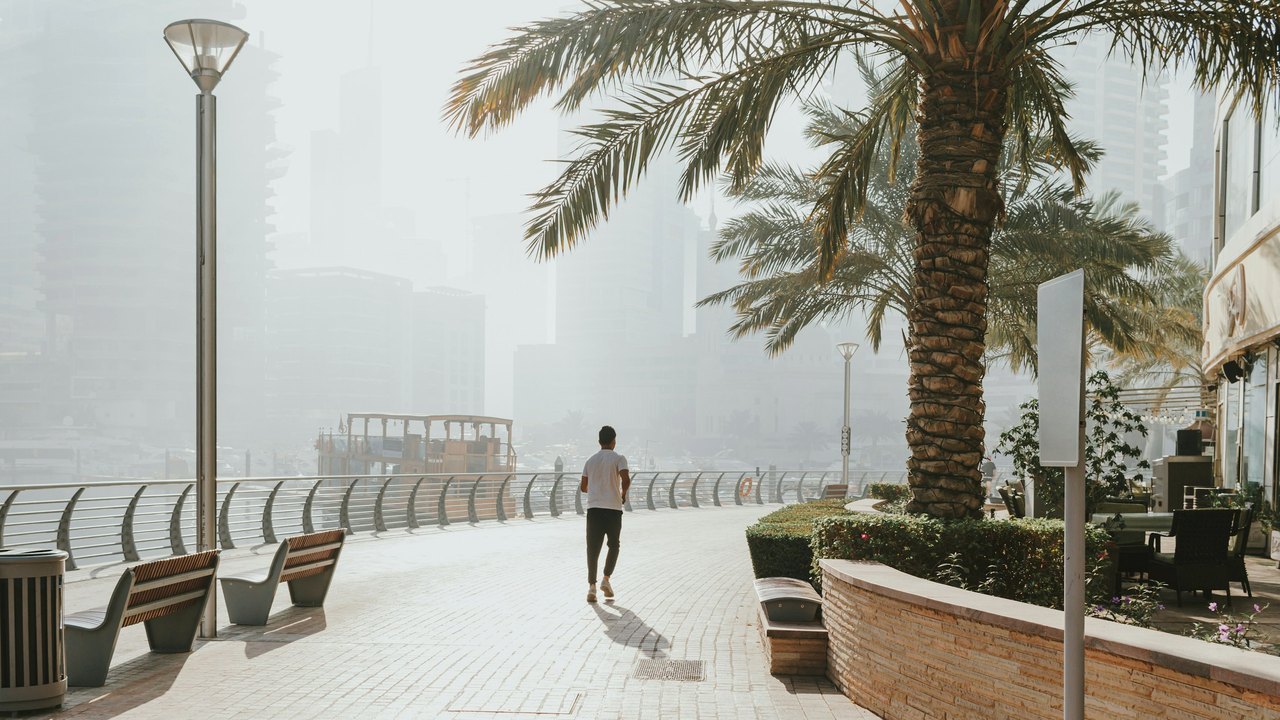
Dubai sits at a latitude where UV radiation is strong for most of the year, not just in summer. The UV index regularly reaches very high levels from spring through autumn, and stays significant even in the winter months when the weather feels mild.
UV exposure is the single largest external driver of visible skin ageing. It breaks down collagen and elastin, triggers the pigmentation changes that show up later as sun spots and uneven tone, and it does this cumulatively: through car windows, on the school run, over coffee on a shaded terrace. You do not need a beach day to bank UV damage in this city; you need only a normal week.
2. Heat and sweat
For several months of the year, stepping outside means an immediate thermal load on the skin. Heat dilates blood vessels, which can aggravate redness and flushing in people prone to it. Sweat mixes with sunscreen, make-up and airborne dust, and in occlusive conditions this contributes to congestion and the summer breakouts many people notice around the jaw, hairline and back.
3. Air conditioning, most hours of the day
Here is the paradox of Dubai skin: the city is humid outdoors for much of the year, yet most residents spend the vast majority of their time in aggressively dehumidified, air-conditioned indoor air. Home, car, office, mall: each is a low-humidity environment that steadily pulls water out of the skin's surface layers.
The result is one of the most common presentations we see: dehydrated skin, which is a lack of water in the skin rather than a lack of oil. Oily and combination skin can be dehydrated too, which is why adding richer creams often fails to fix it, and why skin hydration treatment is one of the most searched-for skin services in Dubai. Dehydrated skin looks dull, shows fine lines more readily, and feels tight after cleansing. The constant flick between 45-degree outdoor heat and 20-degree indoor air also asks a lot of the skin's barrier, and a stressed barrier is more reactive, more sensitive and slower to repair.
4. Dust and fine particulates
Desert dust and urban particulates are a fact of life here, particularly during shamal winds. Fine particles settle on skin, contribute to oxidative stress, and are increasingly linked in research to pigmentation and accelerated visible ageing. On a practical level, they also mean skin in Dubai genuinely needs proper, consistent cleansing more than skin in most cities.
5. Water, pools and hard water
Much of Dubai's tap water is desalinated and comparatively hard. Hard water can leave mineral residues that subtly disrupt the skin barrier, which some people notice as dryness or irritation after washing. Add chlorinated pools, which strip surface lipids, and the picture is consistent: this environment taxes the skin barrier from several directions at once.
What You Can Do About It
The good news: skin responds quickly when the pressure on it is managed intelligently. The essentials are unglamorous and highly effective.
Treat sunscreen as non-negotiable infrastructure. Broad-spectrum, high-SPF sunscreen every morning, all year, regardless of plans, and reapplied if you are outdoors through the day. This is the single highest-return habit for skin in Dubai, and it also protects the results of any professional treatment you invest in.
Rethink hydration as an inside-and-outside project. Water intake matters in this heat, and so does what your skin can hold on to. Look for humectants such as hyaluronic acid to draw water in, and barrier-supporting ingredients such as ceramides to keep it there. Apply hydrating products to slightly damp skin, and consider a night-time routine that compensates for a day of air conditioning.
Cleanse properly, but gently. Daily cleansing earns its place in this dusty, high-SPF, high-sweat environment, but harsh foaming cleansers compound the barrier problem. Gentle, thorough cleansing in the evening; light cleansing in the morning.
Manage the transitions. You cannot avoid the outdoor-to-AC cycle, but you can blunt it: humidifiers in bedrooms make a measurable difference, as does not pointing car vents directly at your face on the commute.
Check what the sun avoidance is costing you. There is a quiet irony in one of the world's sunniest cities: vitamin D insufficiency is common in the UAE, precisely because residents avoid the sun so effectively. Vitamin D matters for skin health as well as much else, and it is easily measured. It is a good example of why we take a diagnostic-first view of skin: what you can see on the surface often has contributors you can only find by testing.
When Professional Support Makes Sense
A well-designed home routine handles the daily defence. Where the climate has already left its mark, or where dehydration persists despite good habits, clinic-level treatment closes the gap.
For persistent dehydration and dullness, injectable skin boosters place hyaluronic-acid-based hydration directly into the skin rather than sitting on top of it, improving hydration, elasticity and glow from within. They are one of the most requested treatments in our clinic through the summer months for exactly the reasons this article describes. We have also written about how peptides, skin boosters and IV therapy can work together when skin needs support on more than one front.
For congestion, dust and the general grime load of city summers, professional deep cleansing facials reset the canvas in a way home cleansing cannot. And for established sun damage and pigmentation, an assessment matters more than a product recommendation: pigmentation has several causes, and the right response depends on which one you have.
Frequently Asked Questions
Why does my skin feel tight and dull in Dubai even though it is humid outside?
Because most of your day is spent in air-conditioned air, which is very dry. Air conditioning steadily draws water from the skin's surface layers, leading to dehydration, tightness after washing, and a dull look even in people with otherwise oily skin. Outdoor humidity does not compensate for eight to twelve hours a day of dehumidified indoor air.
Can my skin be oily and dehydrated at the same time?
Yes, and in Dubai it is common. Dehydration is a lack of water, not oil. Skin can produce plenty of oil while still lacking water in its upper layers, and it sometimes produces more oil in response to dehydration. This is why heavier creams often fail to fix dullness and tightness; the skin needs water and barrier support, not just lipids.
Do I really need sunscreen in winter or indoors?
In Dubai, yes to winter, and near windows the case is strong too. UV levels here remain meaningful year-round, and UVA, the wavelength most associated with skin ageing and pigmentation, passes through glass. Daily broad-spectrum SPF is the cheapest anti-ageing decision available in this city.
What helps with summer breakouts in Dubai?
Consistent, gentle evening cleansing to clear sweat, sunscreen and dust; non-comedogenic sun protection; showering promptly after outdoor exercise; and not over-stripping the skin, which tends to make congestion worse. If breakouts persist beyond the summer pattern, a clinical assessment is worth more than an ever-growing product shelf.
Is Dubai tap water bad for my skin?
Dubai's desalinated water is comparatively hard, and hard water can leave residues that disturb the skin barrier, which some people feel as post-wash dryness or irritation. If you notice it, shorter lukewarm showers, gentle cleansers and immediate moisturising help; some households also fit shower filters.
What is a skin hydration treatment and when is it worth considering?
Clinic hydration treatments range from professional facials to injectable skin boosters that deliver hyaluronic acid into the skin itself. They are worth considering when dehydration, dullness or early texture change persists despite a sound home routine, which in Dubai's climate is a common story. A consultation will establish whether your skin's issue is genuinely hydration, and which approach fits it.
Skin Health, the Long Way Round
Dubai is not going to change its weather. But skin is remarkably responsive when the environmental load is understood and managed, and the difference between skin that struggles here and skin that thrives here usually comes down to consistent, well-chosen habits plus targeted professional support where it is actually needed.
If your skin has been telling you about the climate lately, a consultation at Sequoia Clinic can help identify what it needs, from hydration and barrier repair to treatment of established sun damage. Talk to our clinical team at our villa clinic in Al Barsha.












.png)
.png)

.png)